Skip to content

Site cost control · built in South Africa

You have never been certain what a job actually cost.

Not while it ran, and not afterwards either — not after a week of matching invoices to delivery notes to hire sheets.

Tenvar records each cost once, where it happens, by the person it happens to. There is nothing to reconstruct at month end and nothing to reconcile, so the figure you price the next job off is one you can stand behind.

About twenty minutes, and no card is asked for — or book a walkthrough and we will do it with you.

  • Recorded once, where it happens
  • Works with no signal
  • VAT-exclusive, the way SARS treats it
Mooinooi Ext 4 · Tuesday posted 17:02

Today

R 30 636.10

Labour14 lines
R 4 851.00
Plantowned + hired
R 5 640.00
MaterialsPO-0007
R 18 440.00
Fuel2 lines
R 1 705.10
Budget used 68%

R 2 864 118.44 of R 4 200 000.00

01 — The problem

It is not that the number comes late. It is that you never quite had it.

A desk covered in creased delivery notes, carbon dockets, curled fuel slips, a dusty calculator and a pair of work gloves.
One site, one month, waiting to be reconciled by hand.

Days of reconciling, and still a guess

Invoices against delivery notes against hire sheets against fuel slips, matched up by hand long after the fact. It costs somebody the better part of a week every month, and at the end of it you have a figure you would not swear to.

The record is incomplete before anyone looks

The delivery note is behind the seat of a bakkie. The hire hours are in a WhatsApp voice note. The diesel is on a slip in somebody’s back pocket. Nobody is being dishonest. It is simply gone by the time it is needed.

So the next job is priced off a guess

You tender against what you think the last one cost. If that figure was eight per cent out, the error has been going into every price since — and there is no way to find out which way it went.

Tenvar does not make the reconciliation faster. It removes it. Each cost is recorded once, where it happens, by the person it happens to. There is nothing left to reconstruct afterwards, because nothing was ever missing.

02 — A day on site

One site. One Tuesday. Everything that happened, and what it cost.

Nothing below is typed up afterwards. Every figure is recorded by the person who was standing there, at the moment the money became real — which is why there is nothing left to reconcile at the end of the month.

  1. 06:40 Site manager · phone

    Raises an order for 40 lengths of 110 mm sewer pipe.

    The site has bought this pipe before, so it prices itself off the site’s own list and issues as PO-0007 — emailed to the supplier with the PDF attached, from a phone, at the trench. A product the site has never ordered goes to the office to price or to send out for quotes instead.

    Committed A purchase order is not a cost. Nothing posts until the goods arrive.

  2. 09:10 Site manager · phone

    The truck arrives. He photographs the delivery note and ticks off quantities.

    No signal in the cutting. The capture is written to the handset and sent when a bar comes back — in order, behind the order it belongs to. Missed the truck altogether? He captures it later with a reason instead of a photograph, dated the day it actually came.

    R 18 440.00 Materials, at the ORDER price, waiting for the office to confirm it.

  3. 10:40 Site manager · phone

    A labourer draws 20 litres of diesel off the site float for the generator.

    Logged on the diary as a site item so the litres are accounted for, and costed at the price it was bought at. Fuel is costed where it is bought, once — never a second time because it moved.

    R 432.00 Fuel. Zero-rated, so the figure is the figure.

  4. 15:05 Driver · phone

    Fills up at a rural station against his cash advance and photographs the slip.

    He picks the site the fuel was for. The advance he is holding comes down by the amount on the slip, and the odometer reading feeds that vehicle’s litres per 100 km and its next service.

    R 1 273.10 Fuel — and R 1 273.10 off what he still owes you.

  5. 17:00 Site manager · phone

    Submits the diary. One screen, once a day.

    14 crew at 9 hours. One owned roller for 6 hours. A hired TLB for 8, of which it stood 2 on a burst hydraulic hose. 60 metres of sewer laid.

    R 10 491.00 14 labour lines, one owned-plant line, one accrued hire line. The 60 m posts nothing — it is what the report divides all of this by.

  6. 17:02 The ledger

    Nineteen rows against one site. VAT excluded. Nothing overwritten.

    Every rand of it arrived at the moment the money became real, from the person standing there. Not one was typed by the office off a piece of paper six weeks later.

    R 30 636.10 One Tuesday, at one site, before anybody went home.

03 — Try it with no signal

Switch the signal off. Capture a delivery anyway.

The switch is real and so is the queue. Nothing is sent anywhere — this is the behaviour the app has on a phone in a cutting, running in your browser.

09:10 No signal

Mooinooi Ext 4

Delivery · PO-0007

Pbes · 40 × 110 mm sewer pipe

Tap it. The signal is off — that changes nothing.

On this phone

1 waiting
  1. Order PO-0007 40 × 110 mm sewer pipe · Pbes waiting

The queue is strictly in order. A delivery cannot overtake the order it belongs to, so one item that cannot send holds the ones behind it — and the phone says so, plainly, instead of showing "all saved" over a capture that is gone.

04 — What it does

Four people, and not one of them has to learn accounting.

Each of them gets the screen their job needs, on the device they already carry. The site manager should never have to type an amount he has to work out.

A site manager's gloved hands holding a dusty phone above an open service trench in hard sunlight.

Site manager The phone he already has. Android or iPhone. Offline.

  • Raises an order and issues it himself when the site already has a price. Otherwise it goes to the office to price or to send out for quotes.
  • Photographs the delivery note and ticks quantities as the truck is offloaded.
  • One daily diary: who was here and for how long, which machines and for how many hours, what was laid or moved.
  • Applies for leave without walking into the office.
  • Every screen works with no bar of reception. Captures queue on the phone and send themselves.
A driver photographing a paper fuel slip on the forecourt of a rural filling station at dusk.

Driver The phone he already has. Android or iPhone. Offline.

  • Fills up against a cash advance the office has paid him, photographs the slip and picks the site the fuel was for.
  • The advance balance comes off automatically — and he can see what he still holds.
  • Odometer readings turn into litres per 100 km and a service schedule without anyone keeping a book.
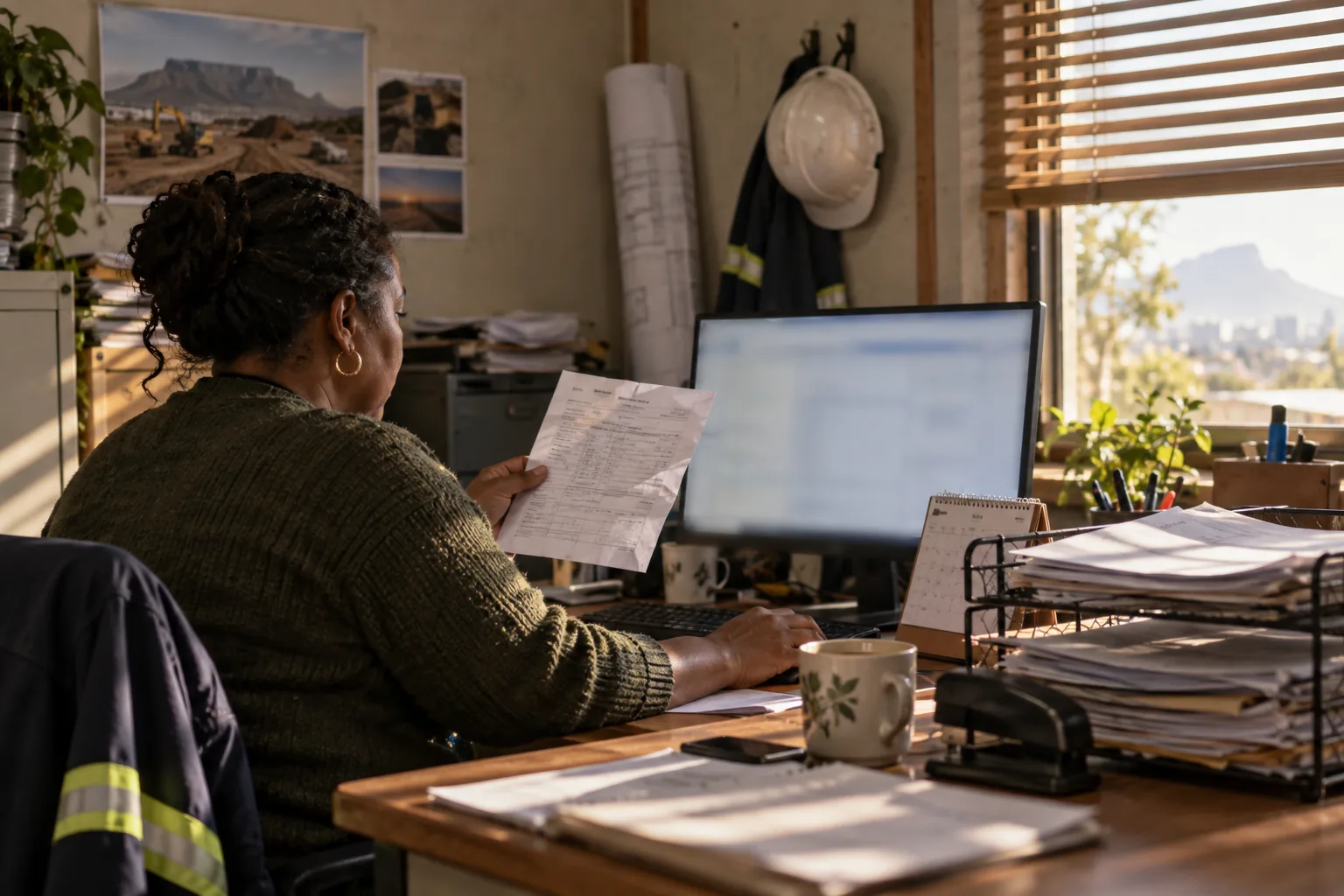
An office administrator at a desk holding a delivery note up against what is on her screen.

Office Desktop.

  • A review queue: everything captured on site waits there until it is confirmed or disputed. Nothing posts silently.
  • Supplier invoices recorded against orders and checked against what was actually delivered.
  • Purchase orders, requests from site, quotes and RFQs out to suppliers.
  • Cash advances paid and aged, creditors, and leave approved on the Act’s rules.
  • Master data: employees and rates, plant, products, suppliers, work sections, sites and budgets.
A contractor standing beside his bakkie at the edge of an earthworks site at sunset, reading his phone.

You Desktop, or the phone in your pocket.

  • One dashboard: what needs you, and what every site has cost so far.
  • Spend by site with the budget alongside and a projection of where it lands at this rate.
  • Cost per metre, per cube, per unit — per whatever you break the job into.
  • Plant hire: the hours you logged against the hours you were billed.
  • A payroll extract, a leave register, and a digest in your inbox every Monday morning.

05 — Where every rand comes from

Six kinds of cost. One rule under all of them.

A cost lands once, at the moment the money is real — hours worked, goods received, fuel pumped, an invoice recorded. Never as a guess, and never twice.

WhatCaptured whereThe cost isLands when
PeopleDiary → Labour. Tick who was here and the hours each. Casuals added by name.hours × that person’s hourly rate, frozen on the day it was worked.The diary is submitted.
Machines you ownDiary → Plant, marked Owned: how many, and hours.machines × hours × the internal DRY rate — wear and depreciation, not diesel.The diary is submitted.
Hired plantA purchase order to the hire company, and the machine on that site’s hire register.accrued nightly off the diary at the register rate, then REPLACED by the hire invoice.Estimated the same evening. Final when the invoice is recorded.
FuelA driver’s fill-up against an advance, a bulk diesel delivery, or litres off site stock.the rand on the slip, or litres received × the order price. Site stock is a usage log only.The slip is saved, or the delivery is received.
MaterialsPhone order → purchase order → delivery note photographed as the truck offloads.quantity received × the purchase order’s line price, excluding VAT. The order price wins.The delivery is captured; the office confirms or disputes it.
Everything elseOffice → Other costs: subcontractor certificates, penalties, rates, a written-off advance.the amount recorded, excluding VAT, with a reason and an optional work section.Recorded.

Recorded, but deliberately not a cost: hours a hired machine stood, work done in metres and cubes, quotes, purchase orders (committed, not spent, until the goods arrive), paying a supplier (the cost landed with the goods; the payment is a bank movement) and cash advances — money out of the bank is not a cost of the site until a slip spends it.

06 — What protects the number

Four rules that make the figure worth trusting.

Nothing is ever edited or deleted

A wrong cost is not tidied away. Correcting it posts an equal and opposite entry, so the total comes right while the original stays visible. When somebody asks in six months why a figure moved, the answer is still there.

Every figure excludes VAT

You claim input VAT back from SARS, so it is not a cost of the job. If the ledger included it, every site would read about 15% worse than it is. The VAT is still recorded beside each invoice so you can tie it back to the paper.

The phone does not need signal

Captures are written to the handset first and sent when reception returns, strictly in the order they were made. If one cannot be sent, the phone says so plainly, with a screen to fix it — instead of showing "all saved" over a capture that is gone.

A cost lands once, when the money is real

Hours worked, goods received, fuel pumped, an invoice recorded. Never a guess and never twice. Hired plant accrues nightly so you can see it, and the invoice then replaces that estimate rather than joining it.

07 — Who it is for

It was built for a groundworks contractor with nine sites.
The problem is not his alone.

Crews, machines, diesel and materials landing at places you are not standing. If your money leaves the office in a bakkie and comes back as a number six weeks later, the shape below is yours whatever you call the job.

An excavator cutting a service trench through red soil on a South African civil site at sunset.

Civil & earthworks

Bulk earthworks, layerworks, stormwater, sewer, water reticulation.

The platform came in under. The pipe did not. You find that out in November, once every invoice is in and the site is long closed.

Work sections split one site into the pieces you actually price, so a site total becomes a cost per cubic metre moved and a cost per metre laid — this week, not next quarter.

A grader and a roller working a rural road rehabilitation in South Africa.

Roads, surfacing & municipal contracts

Rehabilitation, reseals, kerbing, patching, EPWP and term contracts.

Your grader is 180 km away and so is its diesel. The hire company invoices you for hours nobody wrote down.

Hours are logged where the machine works. The plant-hire report puts hours logged beside hours billed, per machine, per month — and the argument stops being a memory test.

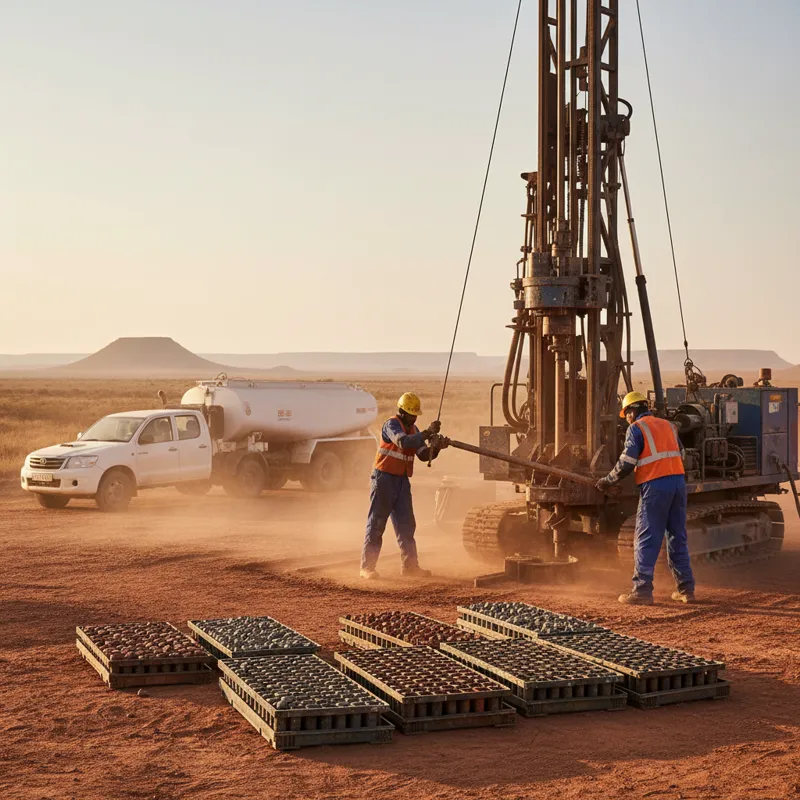
A track-mounted core drilling rig on a levelled pad in dry veld, with core trays laid out in front of it.

Exploration & geotechnical drilling

Diamond core, RC and percussion — prospects, geotechnical investigation and water.

You sell metres at a fixed rate. The ground decides how many metres a bit lasts, and one bad run eats the margin on the whole hole — which you find out when the consumables invoice arrives.

Every hole is a work section, so cost per metre lands against the rate you quoted while the rig is still on the pad. Diesel, bits and rods are costed where they are consumed, on a phone that has never had signal, and standing time is logged as it happens instead of reconstructed in an argument two months later.

Two installers bolting a solar panel onto a mounting rail on a warehouse roof.

Solar PV & electrical reticulation

Rooftop and ground-mount PV, MV/LV reticulation, substations, standby plant.

Six roofs this month. Two of them lost money. Your quoting model still says all six were fine.

Panels, inverters and cable are ordered per site and costed off the delivery note. Crews are costed on the day they were on that roof. The install that lost money says so while there are still four to go.

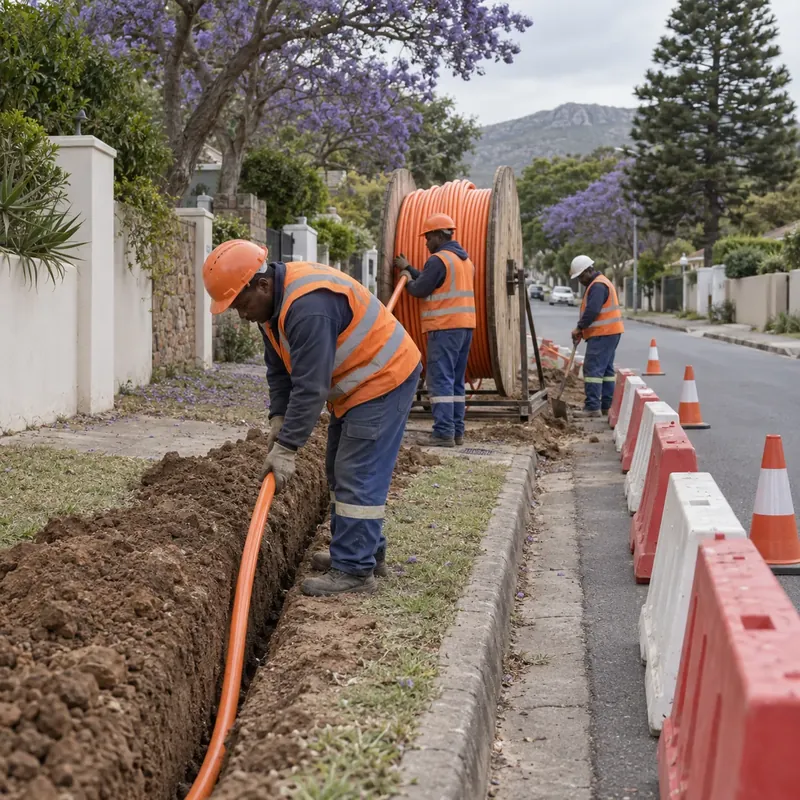
A fibre trenching crew laying orange duct along a suburban street verge.

Fibre & telecoms rollout

Trenching, ducting, blowing, splicing, tower and mast work.

A route is a hundred small costs strung along ten kilometres of verge, captured by nobody.

Each route is a site and each leg of it a work section, so duct, teams and machine hours land against the metre of route they were spent on.

A tractor and a seasonal picking crew working down a row in a citrus orchard at dawn.

Farming & agri operations

Orchards, vineyards, cane, row crops, packhouses. Blocks instead of sites.

Seasonal crews, tractor hours and diesel by the drum, spread over blocks — and one cost per hectare at the end of the season, when it can only be regretted.

A block is a site. Casual crews are ticked off on a phone the day they work, diesel comes off a float, and cost per hectare per block is readable while the season is still running.

A bricklayer on scaffolding working a terrace of face-brick units on a South African housing development.

Building & housing developments

Units, blocks and floors instead of sections. Estates, RDP, industrial shells, shopfitting.

Unit 14 is handed over. Units 15 to 40 are priced off what you think it cost.

Every unit is a site, or a section of one. Close it and it stops counting against your subscription while staying readable forever — so the next forty are priced off what the last one really did.

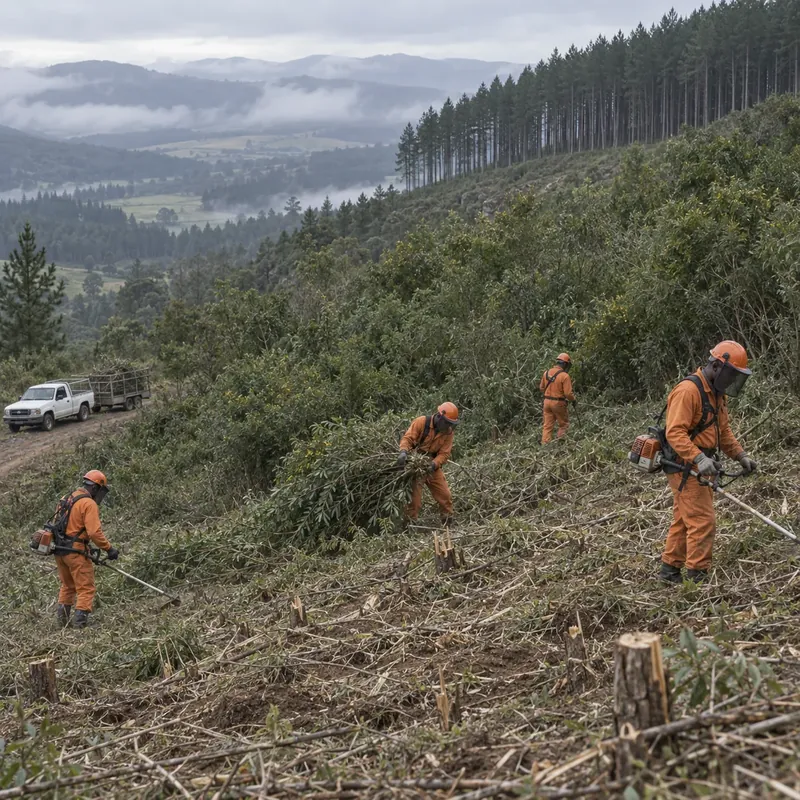
A clearing crew working a hillside of invasive scrub with brush cutters, a plantation on the ridge behind.

Forestry, clearing & landscaping

Harvesting compartments, alien vegetation clearing, grounds contracts, fencing.

Twenty small jobs, thirty casuals, four bakkies and a trailer of brush cutters. The admin costs more than the margin.

One diary a day per crew, on a phone that works with no signal in a compartment. Small plant, jerry cans and casual labour all land on the job they were spent on.

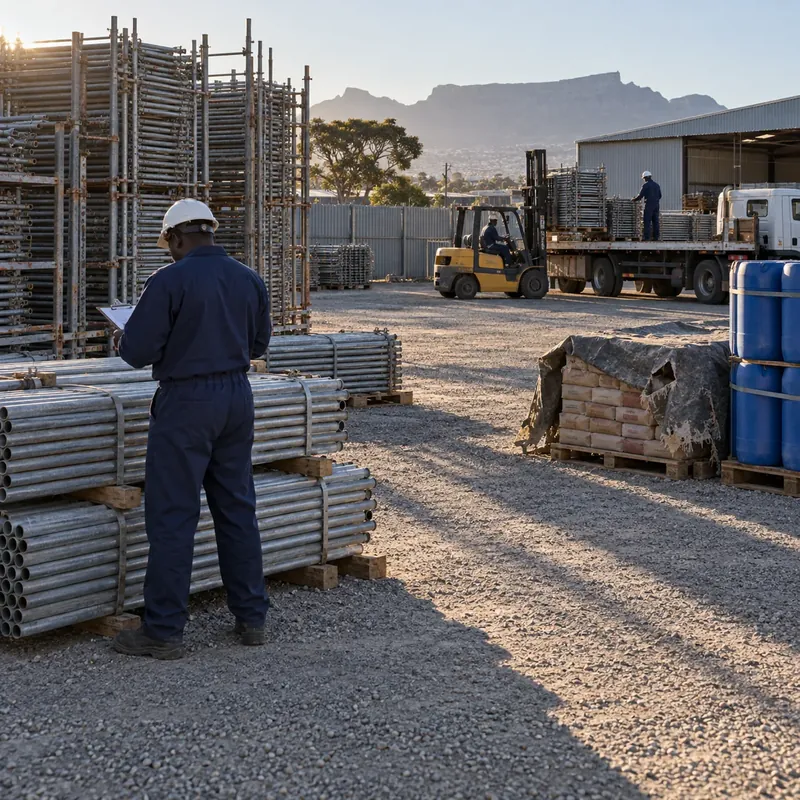
A storeman checking a bundle of scaffold tube in a contractor’s materials yard at first light.

Plumbing, demolition, scaffolding & roofing

Subcontractors running several jobs at once off one yard and one fleet.

The yard issues material to whoever asks for it. Nobody can say afterwards which job it went to.

Material leaves against an order for a named site and arrives against a delivery note photographed there. The yard stops being the hole in the costing.

08 — What you can finally answer

Questions you can answer without asking anybody.

What did that job actually cost — and can I stand behind the figure?
One site, every rand recorded against it, with corrections and reversals still visible beside the originals. None of it was reconstructed afterwards from paper, so there is nothing in it to argue with.
What should I price the next one at?
Cost per metre, per cubic metre or per unit, off your own work sections, taken from jobs you have actually finished rather than from an estimate you half-remember.
What has this site cost me so far?
Spend by site, with the budget alongside and a projection of where it lands at this rate.
Is anything waiting on me?
One review queue. Everything captured on site sits there until it is confirmed or disputed — and the count reads the same on every screen.
Is the hire company billing me for hours we actually used?
Hours logged on site against hours invoiced, per machine, per month.
Is a vehicle drinking more fuel than it should?
Litres per 100 km per vehicle, with outliers flagged against that vehicle’s own history rather than a fleet average.
Who owes me money from a cash advance?
What each driver still holds, and how long he has held it.
What is that machine due for a service at?
Kilometres come off the fuel slips and hours off the diaries, so the schedule keeps itself.
How much leave does he have left?
Worked out the way the Act requires, as of any date you choose — and anyone whose start date is missing is named rather than quietly shown as zero.
What do I pay out this week?
A payroll extract with the overtime split already done, off the same hours the site manager ticked.


09 — What it costs

One plan. You pay for sites, not for people.

If you pay per seat, somebody eventually stops capturing to save one, and the number goes quietly wrong. So every site manager, driver, admin and owner is included, and always will be.

Tenvar

R 4 800/month

Twelve active sites. Everything included.

  • Unlimited users — site managers, drivers, office, you
  • Every feature. There is no higher tier and no add-ons
  • Offline capture on any phone already in a pocket — Android or iPhone
  • Purchase orders emailed to your suppliers with the PDF
  • Every report, every extract, the Monday digest
  • + R 2 000 a month for each further six active sites
Set up your company

Or book a walkthrough first

Excluding VAT, billed monthly. Your data stays yours, and you can have it out whenever you ask.

Active means active

A site counts while you are still spending on it. Finalise it and it stops counting the day you close it — and stays readable forever, because next year’s tender is priced off it. You pay for what you are running, never for what you have ever run.

R 4 800 per month

R 400 per active site · within the base plan

  • 12 sites R 4 800
  • 18 sites R 6 800
  • 24 sites R 8 800
  • 30 sites R 10 800
  • 36 sites R 12 800
  • 42 sites R 14 800

10 — Questions

What people ask on the first call.

If yours is not here, ask it on the walkthrough. We would rather say "no, it does not do that" on a call than have you find out in month two.

Do my site managers need company phones?

No, and it does not matter whether they carry Android or an iPhone — both are supported. Tenvar is a web app: it installs to the home screen straight from the browser, with no app store, no device management and no handsets to buy. On Android the app offers to install itself; on an iPhone it shows the man exactly what to tap, because iOS has never had an install prompt. Do put it on the home screen either way — installed, it opens straight onto Today and iOS keeps what is saved on the phone indefinitely.

What actually happens when there is no signal?

The capture is written to the phone and sent when reception returns, strictly in the order it was made. He is told it is saved on the phone, never that it was sent. You can try this yourself on this page — switch the signal off and capture a delivery.

Do we have to change how we price work?

No. How you price stays yours. What changes is the figure you price off — cost per metre, per cubic metre or per unit, off your own work sections, taken from jobs you have finished rather than from an estimate.

Does this not just move the admin onto my site manager?

It moves it to where it takes seconds instead of hours. He ticks off the crew and the machines once a day, and photographs a delivery note as the truck is offloading — on the spot, while he can still see what he is recording. What it removes is the reconciliation at the other end, which is measured in days.

Does it replace my accounting system?

No, and it is not trying to. Your accountant still does the books. Tenvar answers a different question — what is this site costing me right now, while I can still act on it — which a set of annual financials cannot answer at any speed.

What if someone captures something wrong?

Everything from site lands in a review queue and posts nothing until the office confirms it. If a wrong figure gets through, correcting it posts an equal and opposite entry rather than editing the original, so the total comes right and the history stays visible.

Do you charge per user?

No. Every site manager, driver, admin and owner is included, and always will be. Charging per seat is how a costing system dies — somebody stops capturing to save a licence, and the number goes wrong quietly.

What counts as an active site?

A site you are still spending on. Finalise it and it stops counting against your plan the day you close it, while staying readable forever, because next year’s tender is priced off it.

Is the data mine?

Yes. It is your business’s information, you can have an export whenever you ask, and it is handled under POPIA. What we hold and why is set out in full in the privacy policy.

11 — Getting started

Start it yourself in about twenty minutes — or we will sit with you and do it.

Setting up your own company takes a name, a site and a first crew. If you would rather we did it with you, say so and we will — a costing system loaded with someone else’s guesses at your rates is worse than no costing system at all.

  1. 01

    Half an hour, your numbers

    We walk through your sites, your plant and the way you already price work. If Tenvar is not going to change what you know, we will say so on that call.

  2. 02

    We load your master data

    Employees and rates, plant, products, suppliers, work sections, sites and budgets. Send it in whatever form you have it — a spreadsheet, a printout, a WhatsApp. That is our job, not yours.

  3. 03

    One site first, for a week

    One site manager, one phone, one site. When his diary comes in five days running and the numbers look like the job, we add the rest. Nobody bets nine sites on a first week.

After that the app keeps you honest itself: a live setup checklist that counts your own data and tells you, for instance, that four of your employees have no hourly rate — so a site with a full crew on it is quietly reading R 0.00 for labour.

Know sooner.

Half an hour on a call, your own numbers on the screen. If it is not going to change what you know about your sites, we will tell you on that call.